Category: Jordan

    Dead Sea Jordan: Floating, Mud, Minerals and What to Expect
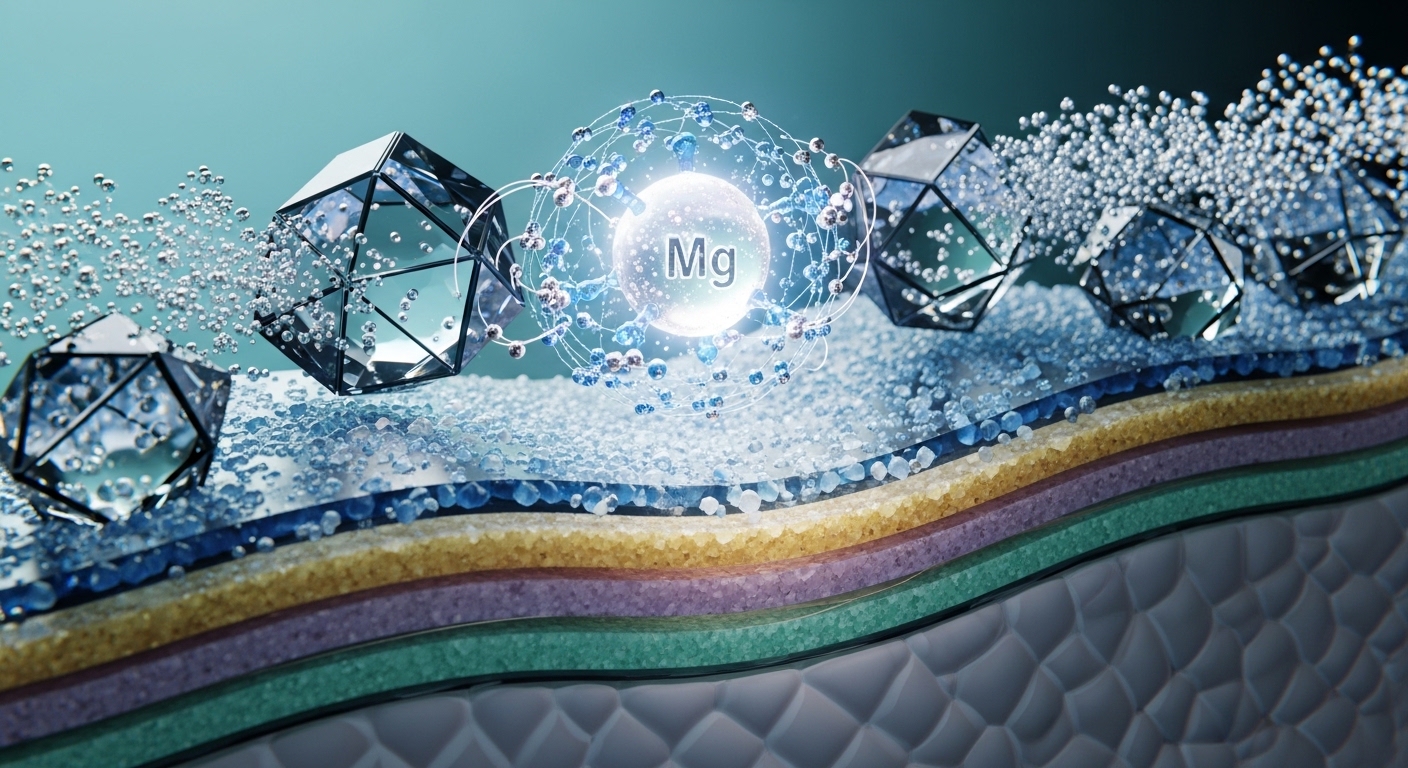
    Dead Sea Jordan minerals floating spa resort

    The Dead Sea Jordan is one of the most extraordinary natural destinations on Earth. Sitting at the lowest point on the planet — roughly 430 meters below sea level — Jordan’s Dead Sea shore is a place where you float effortlessly, coat yourself in mineral-rich mud, and gaze across the water toward the hills of the West Bank. It is unlike anywhere else you will ever visit.

    Dead Sea Jordan minerals floating spa resort

    This guide covers everything you need to know before you go: what to do, where to stay, when to visit, how to get there, and the practical tips that make a difference on the ground.


    Where Is the Dead Sea?

    The Dead Sea lies on Jordan’s western border, roughly 55 kilometers southwest of Amman. It is shared between Jordan to the east and the West Bank to the west, with the northern tip near the mouth of the Jordan River. Despite its name, the Dead Sea Jordan is actually a landlocked salt lake — and the saltiest large body of water in the world, with a salinity roughly ten times that of the ocean.

    The Jordanian side of the Dead Sea is the most accessible for international visitors and offers the most developed resort and spa infrastructure. Most travelers arrive from Amman in under an hour by road. For official tourism information, visit the Jordan Tourism Board.


    Why Visit the Dead Sea?

    The Float

    The reason most people come to the Dead Sea Jordan is to experience the famous float. The extraordinary salt concentration — around 34% — makes the water so dense that it is physically impossible to sink. You simply lie back and the water holds you up. It sounds like a gimmick until you experience it; in practice it is one of those travel moments you genuinely do not forget.

    A few things to know before you float:

    • Do not shave the day before. The salt will sting any open skin or cuts intensely.
    • Avoid getting water in your eyes or mouth. It is deeply unpleasant and can cause temporary vision issues.
    • Floating is harder than it looks. Your legs will want to rise and your head will want to sink. Leaning back and relaxing is the key.
    • Bring water shoes. The rocky, salt-encrusted shoreline is hard on bare feet.

    The Mud

    Dead Sea Jordan

    black mud is rich in magnesium, calcium, potassium, and zinc. Visitors smear it across their skin, let it dry in the sun, then rinse off in the water. The combination of mineral absorption and the natural scrubbing effect as the mud dries is excellent for the skin — and genuinely therapeutic for certain conditions including psoriasis and eczema, as documented in clinical research published by the NIH. Many resorts offer formal mud treatments as part of their spa programs.

    The Minerals
    Dead Sea Jordan minerals wellness and cosmetics

    The Dead Sea’s mineral content is the foundation of a global wellness and cosmetics industry. Dead Sea salts, mud, and mineral extracts are exported worldwide and used in premium skincare formulations — from face masks and body scrubs to targeted treatments for skin conditions. If you are interested in the skincare science behind these minerals, this area of the wellness industry is significant and growing.

    The Landscape

    The Dead Sea Jordan is surrounded by dramatic desert landscape — arid, golden hills dropping steeply to the flat blue-white water below. Sunrises and sunsets over the Dead Sea Jordan are spectacular. The light at both ends of the day takes on a quality that is genuinely hard to describe and easy to photograph.


    Best Time to Visit the Dead Sea

    The Dead Sea Jordan is a year-round destination, but conditions vary significantly by season.

    October to April is the most comfortable time to visit. Temperatures are mild to warm — typically 20–28°C (68–82°F) — and outdoor activities are pleasant. This is peak season for most visitors.

    May to September is hot. Temperatures regularly exceed 38–42°C (100–108°F) at the Dead Sea Jordan shoreline, which sits in a deep depression with intense heat. Visiting in summer is possible — the resorts are well air-conditioned and the experience of floating in the heat has its own appeal — but outdoor time between 10am and 4pm is uncomfortable for most people.

    December and January can see cooler temperatures and occasional rain. The water remains warm (around 22°C/72°F) year-round due to the salt concentration, and the low season means better hotel rates and fewer crowds.


    What to Do at the Dead Sea

    Float and swim — the essential experience. Public beaches exist, but resort beaches offer cleaner facilities, shade, showers, and fresher water for rinsing off after your float.

    Spa treatments — the major resorts have excellent spa facilities offering Dead Sea mineral treatments, mud wraps, and full wellness programs. Even if you are not staying at a resort, many offer day passes that include spa access.

    Sunset and sunrise — find a quiet spot on the shore or book a balcony room facing west for the sunset, or east-facing for sunrise over the Jordanian hills. Both are worth planning for.

    Day trip to Bethany Beyond the Jordan — just north of the main Dead Sea Jordan resort area is the baptism site of Jesus Christ, a UNESCO World Heritage Site. It is a significant religious and historical site and an easy half-day excursion from any Dead Sea resort.

    Day trip to Wadi Rum — Jordan’s iconic red desert is one of the most dramatic landscapes in the Middle East. UNESCO-listed and famously used as a filming location for major Hollywood productions, Wadi Rum is a full-day trip from the Dead Sea. See our Wadi Rum travel guide for everything you need to plan your visit.

    Day trip to Madaba and Mount Nebo — Madaba, known for its Byzantine mosaics, and Mount Nebo, where Moses is said to have viewed the Promised Land, are both within an hour of the Dead Sea. Mount Nebo offers spectacular panoramic views across the Jordan Valley on clear days.

    Day trip to Wadi Mujib — often called the Grand Canyon of Jordan, Wadi Mujib is a dramatic gorge emptying into the Dead Sea. It offers adventure hiking through water canyons and is easily combined with a Dead Sea day.


    Where to Stay at the Dead Sea

    The main resort strip runs along the northeastern shore of the Dead Sea, roughly an hour from Amman. Accommodation ranges from luxury five-star resorts to mid-range hotels.

    Kempinski Hotel Ishtar Dead Sea — widely considered the best property on the Dead Sea. Multiple pools, a private beach, excellent spa facilities, and stunning design. Premium pricing reflects the quality.

    Marriott Dead Sea Resort & Spa — a well-run international property with strong spa and pool facilities, consistently reliable service, and more competitive pricing than the Kempinski.

    Mövenpick Resort & Spa Dead Sea Jordan — popular with families and couples, with a large pool complex, private beach access, and a good range of restaurants.

    Holiday Inn Resort Dead Sea Jordan— a solid mid-range option that delivers good value. Less luxurious than the top-tier resorts but well-located and comfortable.

    For budget travelers, there are also some smaller locally-run guesthouses near the resort strip, though the major resorts offer the best beach and spa access.


    How to Get to the Dead Sea from Amman

    By taxi or private car — the easiest option. The drive from Amman takes approximately 50–60 minutes depending on traffic. Fixed-rate taxis and private transfer services are available from both Queen Alia International Airport and central Amman. The road descends dramatically through desert landscape — the last stretch drops rapidly as you approach the shoreline.

    By rental car — Jordan is well-suited to self-drive travel and the Dead Sea road from Amman (Route 65) is well-maintained. Parking at resorts is generally straightforward.

    By public transport — public minibuses run from South Amman Bus Station (Wahdat) toward the Dead Sea area, but service is infrequent and connections to the resort strip are not direct. Not recommended if you want a comfortable day visit.


    Practical Tips for Visiting the Dead Sea

    Bring a dark swimsuit. The Dead Sea minerals and salt will permanently stain lighter-colored swimwear.

    Do not stay in the water longer than 15–20 minutes at a time. The high mineral concentration draws moisture from your skin. Rinse off thoroughly with fresh water after floating.

    Apply sunscreen generously. The Dead Sea Jordan is at low altitude and reflects sunlight intensely off the water surface. UV exposure is higher than it appears.

    Drink plenty of water. The heat and the dehydrating effect of the salt water mean hydration is important throughout the day.

    Book resort day passes in advance in peak season. The major resorts sell day access to their beach and pool facilities, but these sell out on busy weekends and holidays. Call or book online ahead of time.


    The Dead Sea and Jordan’s Growing Investment Scene

    Beyond its appeal as a travel destination, the Dead Sea sits at the center of one of Jordan’s most significant economic sectors. The mineral extraction and export industry built around Dead Sea resources represents a genuine high-growth opportunity — Dead Sea minerals are in demand globally for pharmaceutical, wellness, and premium cosmetics applications.

    Jordan as a whole has been attracting growing international investment attention, with strong government incentives, a stable political environment, and a strategic location connecting European, Asian, and African markets. For a detailed look at the broader investment landscape across sectors including tourism, renewable energy, and mining, see our complete guide to investing in Jordan at FastCashForex.


    Bottom Line

    The Dead Sea Jordan delivers on its reputation. The float is unlike anything else, the mineral mud is excellent for your skin, and the landscape is dramatic in a way that photographs do not fully capture. Combined with easy day trips to Bethany, Madaba, Mount Nebo, and Wadi Mujib, a two or three night stay at a Dead Sea resort makes for one of the most memorable stops in any Middle East itinerary.

    Jordan is an accessible, safe, and genuinely rewarding destination — and the Dead Sea is one of its best reasons to visit. If you are extending your Middle East trip, see our guide to traveling solo in Dubai.


    Practical information in this guide is accurate as of 2026. Resort pricing, transport options, and entry requirements may change. Always check current travel advisories and visa requirements for Jordan before booking.

    Wadi Rum-The Valley of the Moon-Jordan


    Wadi Rum is near Petra the Rose City Petra is a fascinating ancient city and was selected as one of the New Seven Wonders of the World. The rose-red city carved into the limestone mountains was predominantly …featured in the climax of the Harrison Ford/Sean Connery movie, Indiana Jones and the Lost Crusade.
     

    Wadi Rum also known as The Valley of the Moon is a valley cut into the sandstone and granite rock in south Jordan at 60 km to the east of Aqaba. It is the largest wadi in Jordan. The name Rum most likely comes from an Aramaic root meaning ‘high’ or ‘elevated’. To reflect its proper Arabic pronunciation, archaeologists transcribe it as Wadi Ramm. The highest elevation in Wadi Rum is Mount Um Dami at more than 1800m above sea level.


    History
    Mount Rum in Wadi Rum stands at 1734 m above sea level. The mountain was named the Seven Pillars of Wisdom (for its shape as seven pillars) by Lawrence of Arabia.

    Wadi Rum has been inhabited by many human cultures since prehistoric times, with many cultures–including the Nabateans–leaving their mark in the form of rock paintings, graffiti, and temples. As of 2007, several Bedouin tribes inhabit Rum and the surrounding area.

    In the West, Wadi Rum may be best known for its connection with British officer T. E. Lawrence, who based his operations here during the Arab Revolt of 1917–18. In the 1980s one of the impressive rock formations in Wadi Rum was named “The Seven Pillars of Wisdom” in memory of Lawrence’s book penned in the aftermath of the war, though the ‘Seven Pillars’ referred to in the book actually have no connection with Rum

    The area was “discovered” as a climbing area in 1984 by Tony Howard, Di Taylor, Mick Shaw, and Al Baker. Howard and Taylor have since written two guidebooks: Treks & Climbs in Wadi Rum and Jordan – Walks, Treks, Caves, Climbs & Canyons, both published by Cicerone Press.

    The area centred on Wadi Rum (the main valley) is home to the Zalabia Bedouin who, working with climbers and trekkers, have made a success of developing eco-adventure tourism, now their main source of income. The area around Disi to the NE, home to the Zuweida Bedouin and erroneously also thought to be part of Wadi Rum by visitors, caters more for Jordanian visitors from Amman, with campsites regularly used by party-goers.

    Petroglyphs

    Khaz’ali Canyon in Wadi Rum is the site of petroglyphs etched into the cave walls depicting humans and antelopes dating back to the Thamudic times.
    Petroglyphs in Wadi Rum


    Tourism

    The area is now also one of Jordan’s important tourist destinations, and attracts an increasing number of foreign tourists, particularly trekkers and climbers, but also for camel and horse safari or simply ‘day-trippers’ from Aqaba or Petra. In contrast, there are almost no local or Arab tourists though nearby Disi (not actually part of Rum) attracts young people from Amman at weekends. Popular activities in the desert environment include camping under the stars, riding Arab horses, hiking and rock-climbing amongst the massive rock formations. Jabal Rum (1734 metres above sea level) is the second highest peak in Jordan and the highest peak in the central Rum, covered with snow and rising directly above Rum valley opposite Jebel um Ishrin, which is possibly one metre lower. The highest peak in Jordan is south of Rum close to the Saudi border. Named Jebel um Adaami it is 1840m high and was first located by Defallah Atieq, a Zalabia Bedouin from Rum. On a clear day, it is possible to see the Red Sea and the Saudi border from the top. It is now a very popular trek from Rum village.

    The influx of tourists to this once isolated area has substantially increased the financial fortunes of the Bedouin people, and it is not uncommon to see locals using mobile phones and driving expensive four-wheel drive vehicles; many also have wi-fi and computers to run their adventure tourism businesses.

    The village of Wadi Rum consists of several hundred Bedouin inhabitants with their goat-hair tents and concrete houses, one school for boys and one for girls, a few shops, and the headquarters of the Desert Patrol.
    Article Source
    A panorama of Wadi Rum


    Major Discovery of Christian History found in Jordan!

    Could lead codices prove ‘the major discovery of Christian history’?

    By Chris Lehmann Wed Mar 30, 11:36 am ET


    British archaeologists are seeking to authenticate what could be a landmark discovery in the documentation of early Christianity: a trove of 70 lead codices that appear to date from the 1st century CE, which may include key clues to the last days of Jesus’ life. As UK Daily Mail reporter Fiona Macrae writes, some researchers are suggesting this could be the most significant find in Christian archeology since the Dead Sea scrolls in 1947.
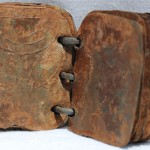
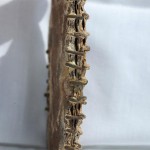
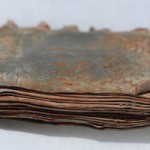
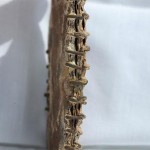
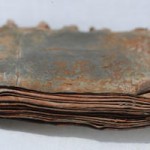
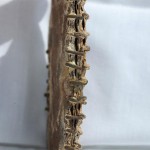
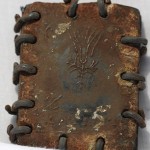
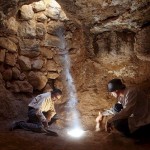
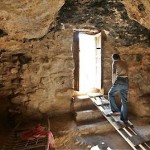
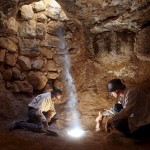
    The codices turned up five years ago in a remote cave in eastern Jordan—a region where early Christian believers may have fled after the destruction of the Temple in Jerusalem in 70 CE. The codices are made up of wirebound individual pages, each roughly the size of a credit card. They contain a number of images and textual allusions to the Messiah, as well as some possible references to the crucifixion and resurrection. Some of the codices were sealed, prompting yet more breathless speculation that they could include the sealed book, shown only to the Messiah, mentioned in the Book of Revelation. One of the few sentences translated thus far from the texts, according to the BBC, reads, “I shall walk uprightly”–a phrase that also appears in Revelation. “While it could be simply a sentiment common in Judaism,” BBC writer Robert Pigott notes, “it could here be designed to refer to the resurrection.”
    But the field of biblical archaeology is also prey to plenty of hoaxes and enterprising fraudsters, so investigators are proceeding with due empirical caution. Initial metallurgical research indicates that the codices are about 2,000 years old–based on the manner of corrosion they have undergone, which, as Macrae writes, “experts believe would be impossible to achieve artificially.”

    Beyond the initial dating tests, however, little is confirmed about the codices or what they contain. And the saga of their discovery has already touched off a battle over ownership rights between Israel and Jordan. As the BBC’s Pigott recounts, the cache surfaced when a Jordanian Bedouin saw a menorah—the Jewish religious candleabra—exposed in the wake of a flash flood. But the codices somehow passed into the ownership of an Israeli Bedouin named Hassam Saeda, who claims that they have been in his family’s possession for the past 100 years. The Jordanian government has pledged to “exert all efforts at every level” to get the potentially priceless relics returned, Pigott reports.

    Meanwhile, biblical scholars who have examined the codices point to significant textual evidence suggesting their early Christian origin. Philip Davies, emeritus professor of Old Testament Studies at Sheffield University, told Pigott he was “dumbstruck” at the sight of plates representing a picture map of ancient Jerusalem. “There is a cross in the foreground, and behind it is what has to be the tomb [of Jesus], a small building with an opening, and behind that the walls of the city,” Davies explained. “There are walls depicted on other pages of these books, too, and they almost certainly refer to Jerusalem.”
    David Elkington, an ancient religion scholar who heads the British research team investigating the find, has likewise pronounced this nothing less than “the major discovery of Christian history.” Elkington told the Daily Mail that “it is a breathtaking thought that we have held these objects that might have been held by the early saints of the Church.”


    Still, other students of early Christian history are urging caution, citing precedents such as the debunked discovery of an ossuary said to contain the bones of Jesus’ brother James. New Testament scholar Larry Hurtado observes that since these codices are miniature, they were likely intended for private, rather than liturgical, use. This would likely place their date of origin closer to the 3rd century CE. But only further research and full translation of the codices can fully confirm the nature of the find. The larger lesson here is likely that of Ecclesiastes 3:1—be patient, since “to everything there is a season.”

    Jordan

    2 Comments

    For many people Jordan begins and ends with the magical ancient Nabataean city of Petra. Petra is one of the Middle East’s most spectacular, unmissable sights and the world’s most dramatic ‘lost city’.

    Lawrence of Arabia, Holy land, bible stories,ancient cities, lost cities, Jordan is one of the most welcoming and hospitable countries of the world.

    this where you get invited by total strangers to thier homes to eat and sleep over.

    Ruined Roman cities, Crusader castles, desert citadels and powerful biblical sites: the brook where Jesus was baptized, the fortress where Herod beheaded John the Baptist and the mountain top where Moses cast eyes on the Promised Land. Biblical scenes are not just consigned to the past in Jordan; you’ll see plenty of men wearing full-flowing robes and leading herds of livestock across the timeless desert. But it’s not all crusty ruins. Jordan’s capital Amman is a modern, culturally diverse Arab city which is light-years away from the typical clichés of Middle Eastern exoticism.

    The country also offers some of the wildest adventures in the region, as well as an incredibly varied backdrop ranging from the red desert sands of Wade Rum to the brilliant blues of the coral-filled Gulf of Aqaba; from rich palm-filled wadis to the lifeless Dead Sea. Ultimately it’s the sensual delights of daily life in the Middle East that you’ll hanker for longest after you return home; the bittersweet taste of cardamom coffee or the smell of a richly scented argileh (water pipe); the intoxicating swirl of Arabic pop sliding out of an Amman doorway and the deafening silence of the desert.

    Jordanians are a passionate and proud people and the country truly welcomes visitors with open arms. Despite being squeezed between the hotspots of Iraq, Saudi Arabia and Israel & the Palestinian Territories, Jordan is probably the safest and most stable country in the region. Regardless of your nationality, you’ll be greeted with nothing but courtesy and hospitality in this gem of a country.
    Please comeback for more details on Jordan!


    Please vote for this photo from Capture Jordan http://www.capturejordan.com/SearchViewPhoto.aspx?UserPhotosId=2446&txtSearch=amir%20abuhouran

    google90d013b4a8c95a0c.html